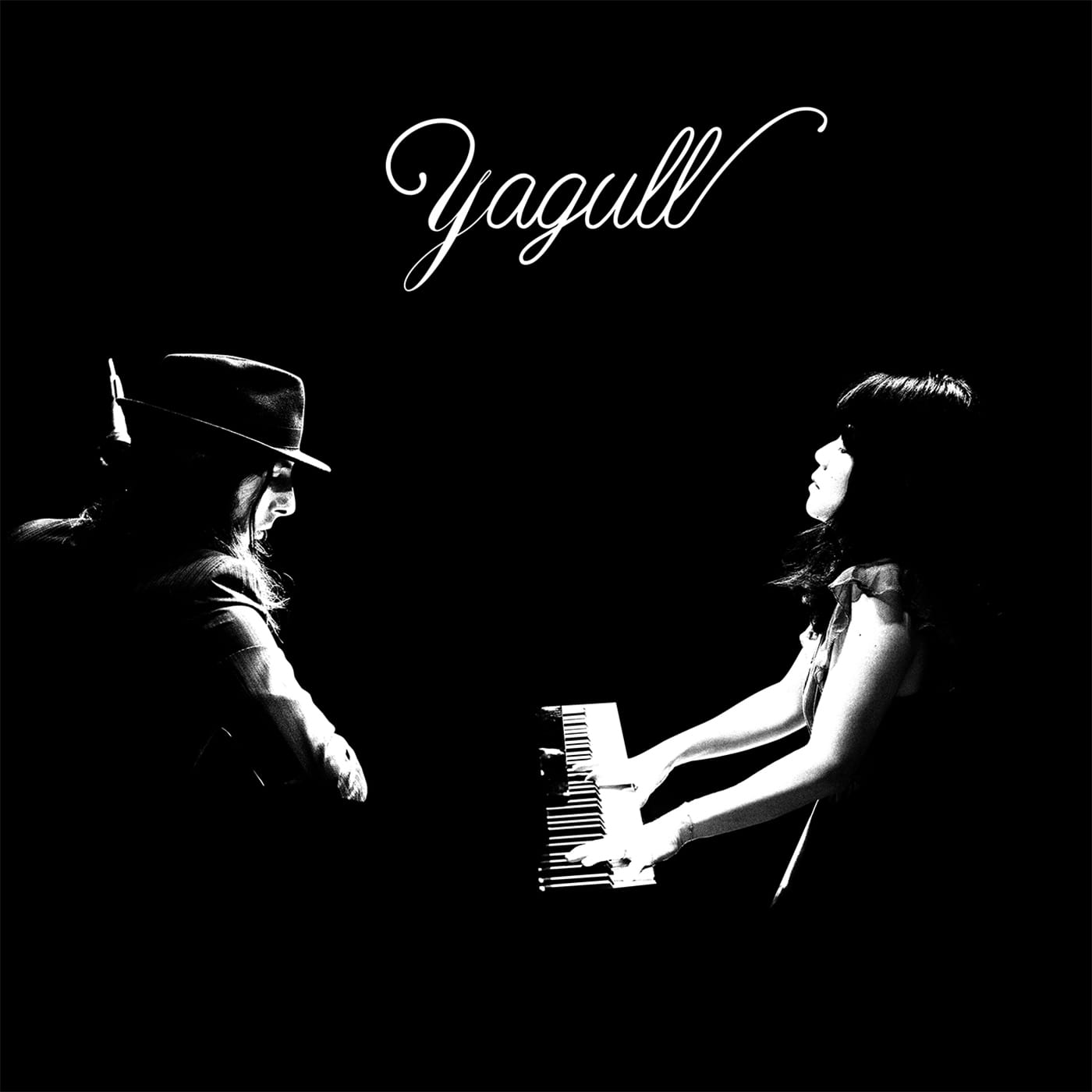
A Musician Couple, One Sound: Talkwith Yagull from New York to the World
New York is a melting pot for musicians from around the world, and it was here that I had the pleasure of interviewing guitarist and composer Sasha Markovic of the duo Yagull. Known for crossing genre boundaries, Yagull blends cinematic melodies with organic, textured sounds that feel both intimate and expansive.
Over lunch at a cozy Italian café, at Forest Hills in Queens, Sasha shared how his musical background and personal music references rooted in ’70s ‘80s rock, blues, and world music has shaped Yagull’s songs and sound. He talked about his music creation and collaboration with his wife, Kana Kamitsubo, a pianist whose classical and Japanese music influences add balance and depth to their music. Together, their contrasting unique styles come together naturally, creating a sound that resonates across world cultures.
Yagull’s music has earned recognition from publications such as Time Out New York and All About Jazz, often described as “post-rock chamber music.” Their interpretations offer fresh takes on classic rock material by iconic various legendary bands like Black Sabbath and Deep Purple, honoring the originals while bringing something new to the stage..
The relaxed lunch setting made the conversation easy and personal, giving Sasha space to reflect on Yagull’s creative journey, their collaborative process, and the stories behind the music. It was a warm, insightful exchange that revealed the passion behind Yagull’s sound, reaching listeners from New York to Tokyo, to Belgrade and beyond. Let’s follow my conversation with Sasha on Yagull.
Q: Hi Sasha, finally we meet, after such a long time
A: Yes, Naratama, finally we found the time for lunch.
Q: I’ve been listening to your music, Yagull. I can feel that two musical instruments, piano and guitar can occupy very different expressive spaces. What inspired you two to form Yagull and explore music in a piano–guitar duo format? and why is the duo named Yagull?
A: Yagull as a piano-guitar duo was born in 2012, when I met Kana. Prior to our meeting, under the name Yagull, I had released an album “Films” which were my acoustic guitar compositions, with some guitar duos featuring cello, flute, sax. Films also featured a couple of reinvented acoustic classic rock covers from Sabbath Bloody Sabbath to White Room, as my tribute to music I grew up listening to. Yagull as a duo and a live project was born when Kana joined, and we started composing together and performing live. When we started, there was a natural connection between us. Even though we came from different musical backgrounds, our approaches to music and composition always align. Within the first few months, we already had over 20 pieces fully composed and arranged. Since then, we never stopped. Yagull's name came in a kind of banal way. I recorded a track in the middle of the night, and just before going to sleep quickly titled it Ya - gull. I used my acoustic Yamaha and a Seagull guitar on it. I never changed a title. When I added this track to my first solo album and was brainstorming a project name, everything just clicked. I sometimes tease my friends about wishing there was some mystical, super deep story behind it, but honestly, it was really cool.
Q: What are the creative challenges of blending these instruments into a single organic beautiful sound without one overpowering the other?
A: I think the crucial element for this kind of collaboration to work is how the instruments give each other space, whenever needed. In most cases less is more, and by opening space for the other instrument, you let it shine, and express the feel and message of the stronger and clearer composition. Some of my most favorite music is rather simple, and is driven by feel rather than complicated arrangements. In our case, it is important to make sure to carefully blend between the harmony of piano and guitar, since they cover different parts of the sonic spectrum. Each piece was approached differently with intention. We often begin with an idea that inspires us, aiming to structure the song while balancing the piano and guitar to highlight that idea. This inspiration may come from melodic concepts, riffs, or particular piano and guitar models that guide us in arranging the pieces in specific manners. Each instrument/ room/ mic has its own uniqueness, too, so we pay attention to a detail, and adapt each time when playing/ mixing.
Q: Yagull brings together Kana’s classical and jazz background from Japan and Sasha’s deep roots in European 70s rock, blues, and world music. How do these different musical souls, vibes and histories meet when you begin creating a new piece together?
A: Although we came from very different musical backgrounds, our connection to music and approach to music aligns. We constantly shared our musical influences with each other and soon realized that we love many of the same artists, too. For example, we are both fans of Stevie Wonder, Miles Davis, and Carole King. There are many others. In the early days, I introduced more classic rock and hard rock artists to Kana, and she shared the music of many great contemporary jazz artists with me. When we compose, usually one of us starts by creating a riff, chord progression, and the other one joins, compliments, and in many cases takes it to another place. That is the beauty of creating as partners. Our fused musical backgrounds definitely show in our pieces. Of course, there are challenges, too as we both have our own sonic visions. Soon, we became so inspired to go beyond our own comfort zones; Kana started to create songs that are more powerful and punchy like 101 due to my rock influence while my ears started hearing more jazzy melodies when improvising. At the beginning of our creative collaborations, we used to passionately argue over minor arrangement elements, but with time we learnt to give each other space and trust each other’s instincts.
Q: In your composition Riverwas, I sense a blend of 1970s Western rock rhythms combined with touches of classical piano ballad. In Searching for the Moon, classical sound notations mixed with pop elements feel more dominant, while in 101, you combine minor piano chords with blues guitar notes improvisation. I am just wondering. How is your writing process able to produce such rich compositions? Is it more structured, conversational, or is it just driven by improvisation and spontaneous playing?
A: Our musical compositions always begin as an improvisation built on top of a riff of a melodic idea. We usually quickly come up with a basic sketch and structure.Then we start polishing and defining sections in a more detailed way. For example, Searching For The Moon was completely improvised on the spot, during a photo shooting session we were in. The photographer asked us to play something, and the piece came together pretty much in the same form it appears on the Yuna album. Riverwas was composed, starting as Kana’s 5/4 time signature practice challenge. Then, I added very dynamic rhythms, making it drive, with an image of a hawk flying over the river in my mind. For 101, Kana, one day, told me she got an idea that she was influenced by listening to rock.Then she played the theme and riff section which inspired me to add the driving chords section after. Then, Kana suggested that she would like to add an introduction and when she composed the section, she told me it had Ryuichi Sakamoto influence. My guitar solo started as an improvisation, but I worked and defined it to what it ended up on the album. When we play it live, I pretty much stick to it, because I believe it serves the composition. Most of the other solos I perform have a simple theme, but there's always room for some variation and improvisation. Meanwhile, Kana's 101 solo is never the same, always improvised right there on the spot, and for me, it's always a standout moment in our shows. It allows me to enjoy her melodic ride while playing the rhythm guitar on it. Honesty, We both are fans of each other’s compositions, so this makes our collaboration always fun. I love the quote “improvisation is a quick composition, and composition is slow improvisation”. There are so many ways we create our compositions. We try to have a variety of approaches, to make it fresh, more exciting and fun.
Q: Having performed across Japan, Serbia, New York, and even at United Nations events, how have your Japanese and Serbian backgrounds influenced not only your sound, but also the way audiences around the world connect with Yagull’s music?
A: Well. Music is a universal language and speaks to everyone. I believe that our personal bond in music is more instinctual than influenced by culture. I feel the true personal connection to music is rather primal than cultural. What really draws one to certain pieces of music is often hard to explain. Of course, we are all in many ways a product of the culture we grew up in, but the truest connection to music goes way beyond. That being said, there are definitely many elements of our cultural backgrounds heard in our music. For instance, Kana was greatly influenced by Ryuichi Sakamoto and Joe Hisaishi, both of whom uniquely have a lot of Japanese motives and themes in their music. I had been exposed to lots of ethnic music as a child in the former Yugoslavia, as well as classic rock, hard rock, blues rock, jazz, prog rock (as much as I dislike this label) . These genres, rooted in the 1970s, are extremely diverse and somehow fit the music sensibilities of many people in Serbia and across former Yugoslavia. Yagull albums have been reviewed in many countries, in diverse music publications, from jazz, classical, classic rock, prog, even metal magazines. Over the past ten years, fans who reached out to us about our music have come from every corner of the globe. Music is universal and sometimes it is hard to put a label on it. Even though this makes it harder to promote, I think that most music eventually reaches people who appreciate it. In the past 20 years I collaborated and recorded with musicians from over 50 different countries. Being in New York has been an enormous blessing. There are so many talented musicians in the city and the ability to logistically easily connect and work together is something I have always been thankful for.
Q: Your third last album, Yuna, was released in 2018. When are you planning to release a new album? Are you planning to perform in New York this year? Where can people reach you?
A: Over the last few years, we've been recording like crazy and have a bunch of new albums ready to go. It has been an ultra-creative time for both of us. In 2026 and 2027, we are planning to release at least 2 albums and several singles. We have a full album of reinvented acoustic classic-rock covers, as well as some of my favorite 1970s deep cuts. Some of the artists we covered are Deep Purple, Black Sabbath, Thin Lizzy, Rory Gallagher, and Judas Priest. Also, there are new studio piano guitar duo recordings we recently did in Osaka. We are excited to share our new music. We create and record daily, so there is more to come for sure. You can listen to our music on all major streaming platforms. You can support us directly through Bandcamp. Besides Yagull, Kana has her own account focusing on solo piano works under the Kana Markovic name as well. We can be reached through our website www.yagull.com and Instagram @yagull_nyc and other social media.
Q: What are your tips for musicians who want to create a group using different non-electric instruments?
A: Do as many performances as you can in intimate smaller settings, experience as many different sounding rooms. It helps define your desired sound standards and goals once you are in the miked environment. Importantly, it helps you troubleshoot and set up in non-ideal room settings. At the end of the day, “the perfect acoustic sound” is whatever feels right to you.
Interviewed by Naratama / January 30th, 2026